·6 min read
Flying home after implant surgery
Cabin pressure, swelling and timing — the part of dental travel that nobody plans for until they are at the airport.

General information, not a treatment instruction. Recovery differs from patient to patient, and the guidance your own surgeon gives you after your operation always takes priority over anything written here. If you are worried about something, message the clinic rather than waiting.
How soon can you fly?
For a straightforward single implant, flying the next day is usually fine. For a full arch, a sinus lift or zygomatic implants, we ask patients to stay two to three days after surgery. That is not caution for its own sake: the swelling peak lands on day two or three, and if anything is going to need attention, that is when it shows.
The safe answer is always the one your surgeon gives after your specific operation. Book a flexible return ticket if you can — it costs less than changing a fixed one.
What cabin pressure actually does
Cabin pressure at altitude is roughly equivalent to standing on a 2,000-metre mountain. Trapped gas in a body cavity expands slightly, which is why a recent sinus lift is the one procedure where the timing genuinely matters — the sinus membrane has been lifted and the space beneath it grafted.
For an ordinary implant site in the jaw there is no sealed cavity involved, and pressure is not the risk. Dehydration is. Cabin air is very dry, and a dry mouth is a worse environment for a healing wound.
In your hand luggage, not the hold
- Your painkillers and antibiotics, in the original packaging, with the clinic's prescription sheet.
- Gauze pads, in case of light oozing on the plane.
- A soft toothbrush and a small bottle of water.
- The clinic's WhatsApp number saved offline, and your treatment summary.
Ask for an aisle seat and drink water steadily. Skip the alcohol and the in-flight coffee — one dehydrates you, the other is served hot enough to matter in the first days.
Planning the length of the trip
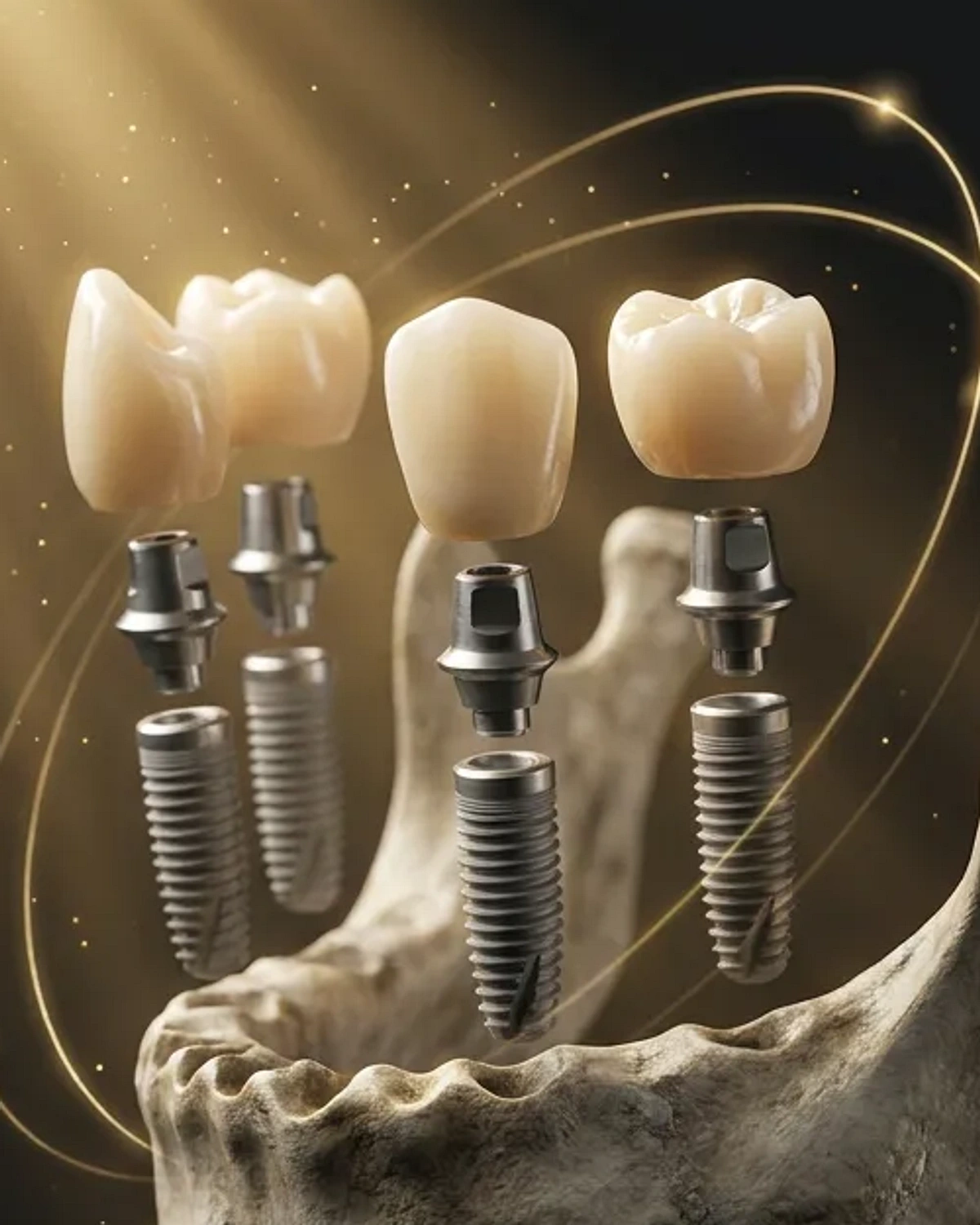
Most implant treatment is two visits, not one. The first covers the surgery and the temporary teeth; the second, after the bone has integrated, fits the permanent bridge. Trying to compress both into a single stay is the most common false economy in dental travel, and it is the request we most often decline.
- First visit: typically 5 to 7 days, depending on the procedure.
- Gap: 3 months for a lower jaw, up to 6 for an upper jaw.
- Second visit: typically 5 to 7 days for fitting and adjustment.
If something changes while you are away
Related treatments
Before you book anything
Send your X-ray. Get an honest answer.
Tell us what is going on and Dr. Hatice reviews it herself, then tells you what is actually possible — including when the answer is no.
- Every case personally reviewed by Dr. Hatice
- We say so when implants are not right for you
- 5 languages spoken
- 25 min from Istanbul Airport
- Written quote before you fly
- Aftercare continues once you are home
More articles
- 9 min readWhy two implant quotes for the same mouth are never the same price
- 5 min readWhen we say implants are not the answer
- 7 min readHow long do veneers actually last?
- 6 min readWhat you can eat after implant surgery, week by week
- 8 min readAfter implant surgery: what happens in the first 14 days